
July 29, 2026
Surface finishing is often mistaken for a cosmetic step, but aerospace coatings are a critical part of a component’s structural protection system. The finish applied to a metallic part frequently determines whether it achieves its full design life or fails prematurely in service. For aerospace and defense buyers, finishing is an engineering discipline, not an afterthought.
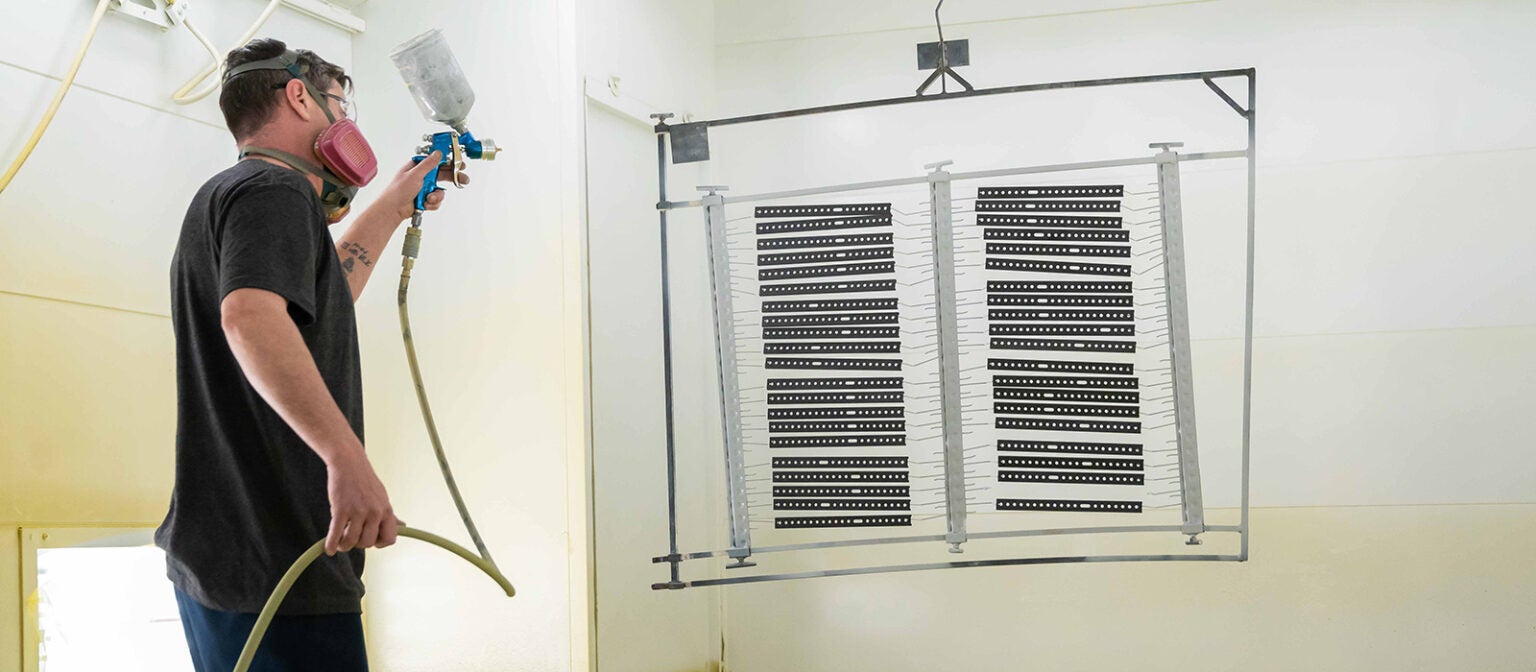
Aerospace components face brutal conditions: high-altitude weathering, UV radiation, saltwater, temperature swings, and chemical exposure. The right coating system pushes back against all of it. Well-engineered aerospace coatings:
The key takeaway is simple. A poorly finished component can fail long before the metal itself reaches the end of its design life.
No single finish works for every alloy. Aluminum, titanium, stainless steel, and composites each behave differently, and the coating strategy must reflect that. Engineers weigh surface preparation, adhesion requirements, galvanic corrosion prevention, and primer compatibility before a single layer goes on. The best finish is determined by material, environment, and intended service life.
This is also where specialized systems matter. Chemical Agent Resistant Coatings, or CARC, are multilayer systems built with a primer, a base coat, and a low-gloss topcoat. Primers create a strong adhesive bond, base coats form the protective barrier, and topcoats deliver durability, corrosion resistance, and easier decontamination. Many defense contracts require CARC to meet military specifications.
Most coating failures begin before any paint is applied. Contamination, poor cleaning, inconsistent surface roughness, or a skipped conversion coating can undermine even the best topcoat. Disciplined preparation, including cleaning, media blasting, chemical conversion coatings, and inspection before coating, is often more important than the coating itself.
Finishing is not simply painting a part. Every step must be controlled, documented, and repeatable to satisfy FAA and military specifications, corrosion protection requirements, environmental regulations, and traceability standards. Under a quality management system such as AS9100, finishing carries the same rigor as machining or forming. Environmental responsibility matters too. As an ISO 14001 certified facility, Re:Build Cutting Dynamics operates a formal environmental management system focused on continuous improvement, regulatory compliance, and stronger sustainability performance. Compliance depends on validated finishing processes just as much as validated manufacturing processes.
When sourcing metallic aerospace structures, buyers should evaluate finishing capability as closely as machining or fabrication. Ask about in-house finishing, process controls, inspection methods, certified quality systems, and the ability to deliver complete, ready-to-install assemblies. There are practical advantages, too. When your part manufacturer also handles painting, sourcing is simpler because it lives under a single purchase order. Keeping finishing in-house also cuts lead time by eliminating the transit and processing delays of shipping parts out for coating. A supplier’s finishing expertise has a direct impact on quality, delivery, cost, and long-term reliability.
At Re:Build Cutting Dynamics, finishing is part of an integrated, AS9100-certified operation. We apply everything from aerospace-grade primers to CARC top coats with full lot traceability, and because we consolidate fabrication, machining, forming, assembly, and finishing under one roof, we reduce supply chain risk while delivering consistent quality on every component. To learn how our finishing capabilities can strengthen your next program, contact Re:Build Cutting Dynamics.
Aerospace coatings are engineered finishing systems applied to metallic and composite components to protect against corrosion, oxidation, UV exposure, and chemical attack. They extend fatigue life, preserve dimensional integrity, and help components meet strict aerospace and defense specifications.
No. While coatings can improve appearance, their primary purpose is structural protection and compliance. A properly applied coating system prevents environmental degradation that could otherwise cause premature component failure.
CARC is a multilayer coating system, typically a primer, base coat, and low-gloss topcoat, designed to resist chemical agents and simplify decontamination. It is widely used on defense aircraft and equipment and is often required to meet military specifications.
Sourcing coating from your part manufacturer simplifies procurement through a single purchase order and reduces lead time by eliminating the transit and processing delays of sending parts to an outside finisher. It also keeps quality and traceability under one roof.
Our team at Re:Build Cutting Dynamics wants to ensure that all your questions regarding aerospace coatings have been answered. With that in mind, feel free to contact us today with any questions you may have. We look forward to assisting you.
