
June 24, 2026
The defense industry faces an unprecedented timeline challenge. The military now demands what they call “speed of relevance,” compressing traditional procurement cycles down to just months in some cases. For defense contractors at every level, the solution to meeting these accelerated timelines lies in integrated assemblies.
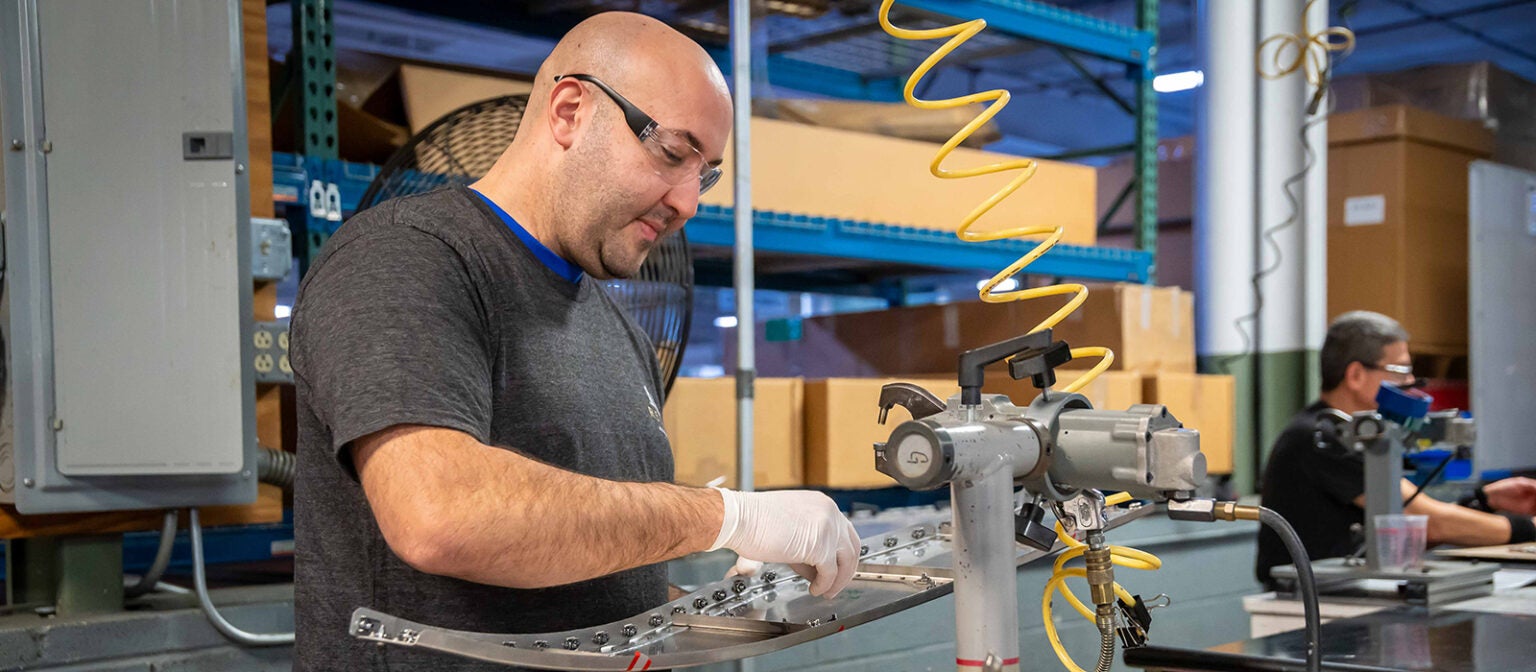
Integrated assemblies mean working with a single manufacturing partner that can produce components, manage sourcing, and perform final or sub-assembly operations under one roof. Instead of coordinating five or more separate suppliers for components, structural fabrication, electrical work, painting, and final assembly, integrated assemblies consolidate these capabilities into a unified manufacturing solution.
This approach addresses critical pain points that slow defense production: the complexity of herding multiple suppliers on different timelines, communication breakdowns across vendors, and the costly lag time when design changes occur mid-production.
Large defense contractors recognize the need to move faster but often lack available facility space and personnel to scale quickly. Integrated assemblies provide surge capacity without the capital investment of expanding internal operations.
Companies gaining market traction can’t always scale manufacturing capacity fast enough to meet demand. Consolidated manufacturing offers immediate, certified production capability to fulfill growing contract requirements.
Innovative startups often have strong designs and customer traction but no manufacturing infrastructure. Building a facility and obtaining AS9100 certification could take years they don’t have. Integrated assemblies eliminate this barrier to entry, providing immediate access to certified manufacturing.
In dynamic development environments, design revisions are inevitable. When your component manufacturer also handles assembly, changes can be managed in real-time. Instead of a separate supplier continuing to produce 500 outdated Rev 1 components while your design moves to Rev 2, integrated assembly solutions allow rapid pivots that prevent waste and maintain momentum.
Rather than managing separate timelines for component suppliers, structural fabricators, electrical contractors, and assembly companies, you work with one partner. This consolidation reduces handoffs, streamlines communication, and frees your team to focus on design innovation and customer relationships.
Integrated assemblies offer true manufacturing flexibility tailored to your production needs. You’re not locked into a one-size-fits-all approach. Need complete turnkey assembly? We handle it. Prefer sub-assemblies that arrive ready to integrate into your final product? That works too. For example, armament access panels can be delivered as complete sub-assemblies with hinges, latches, and coating already applied, rather than as boxes containing 50 individual components that require additional assembly steps. This flexibility eliminates unnecessary work on your production floor and accelerates your final assembly line.
Defense assemblies typically integrate multiple materials, each with unique manufacturing requirements. Composites, aluminum, stainless steel, and titanium components must be formed, bent, or molded to specification before assembly. Re:Build Cutting Dynamics manages this complexity under one roof with hot forming, hydroforming, precision bending and forming, plus complete painting and coating services.
Starting production in a new facility requires AS9100 certification, a time-consuming process. Working with partners that are already-certified eliminates this delay, allowing production to begin immediately while maintaining full aerospace and defense compliance.
Lean manufacturing principles drive ongoing efficiency gains in integrated assembly operations. When one defense contractor requested doubled output, analysis identified painting as the bottleneck where masking took 30 minutes per part. By designing a custom fixture, the process was reduced to three minutes while eliminating damage during unmasking. These improvements happen faster when component production and assembly share the same continuous improvement culture and facility.
While a single source partner provides immediate surge manufacturing capacity, they also serve as a bridge to long-term production strategies. Partners offering integrated assemblies can leverage broader resources to help you develop your own assembly cells, implement automation, create wire harness processes, and establish the systems needed for sustainable in-house production.
Equipment portfolios for integrated assemblies continue expanding, and automation is being introduced strategically to eliminate bottlenecks and scale operations faster. This ongoing investment ensures these capabilities evolve with your needs.
The military’s call for speed of relevance has displaced traditional contractors who can’t adapt. Whether you’re an established organization facing new timeline pressures, a growing company scaling rapidly, or a startup with breakthrough technology, integrated assemblies provide the answer.
Consolidating suppliers, accelerating response to design changes, and providing certified manufacturing capacity immediately doesn’t just speed up production, it keeps you relevant in a defense landscape that no longer tolerates long development cycles.
Defense contractors who embrace this consolidated manufacturing model gain the flexibility to respond at the speed their customer’s demand. In an industry where relevance is now measured in months, not years, unified production capabilities have become essential to competitive success.
Defense contractors can no longer afford the complexity and delays of managing multiple suppliers across different timelines. Whether you’re an established prime contractor seeking surge capacity, a fast-growing company that can’t scale quickly enough, or a startup with innovative designs but no manufacturing infrastructure, Re:Build Cutting Dynamics provides the integrated assembly solutions you need to remain competitive.
Our AS9100-certified facility delivers complete assemblies and sub-assemblies with multi-material capabilities including hot forming, hydroforming, precision bending and forming, painting, and coating. We consolidate your supply chain, accelerate response to design changes, and provide the flexibility to meet your specific production requirements.
Don’t let traditional procurement timelines make your product irrelevant before it launches. Contact Re:Build Cutting Dynamics today to discuss how our integrated assembly capabilities can help you meet military demands for speed of relevance.
Integrated assemblies deliver several key advantages for defense contractors. By consolidating component manufacturing, sourcing, and assembly operations under one roof, you eliminate the complexity of coordinating multiple suppliers on different timelines. You also gain simplified program management with a single point of contact instead of herding multiple vendors, plus immediate access to AS9100-certified production capacity without the years required to build and certify your own facility.
Speed of relevance is a term the military uses to describe the need to compress traditional procurement timelines. Historically, bringing a new defense product to market took years from concept to launch. In some cases, the Army has now compressed this timeline to just a few months. Defense contractors who can’t adapt to these accelerated timelines risk becoming irrelevant before their products reach the market.
When design revisions occur mid-production, a single source partner managing both component manufacturing and assembly can coordinate changes in real-time. This prevents costly waste and maintains project momentum in dynamic development environments.
Yes. Manufacturing flexibility means you can choose complete turnkey assembly or sub-assemblies tailored to your production needs.
Building a new facility and obtaining AS9100 certification can take years you may not have. Partnering with a certified manufacturer eliminates this barrier entirely, providing immediate access to certified production capacity.
Our team at Re:Build Cutting Dynamics wants to ensure that all your questions regarding integrated assemblies have been answered. With that in mind, feel free to contact us today with any questions you may have. We look forward to assisting you.
