
May 27, 2026
As aerospace manufacturers continue pursuing weight reduction and performance optimization, large format thermoplastics are emerging as a compelling alternative to traditional metallic components. For OEMs evaluating this conversion, understanding the capabilities, benefits, and considerations of large format thermoplastic forming is essential for making informed decisions about material selection and manufacturing partnerships.
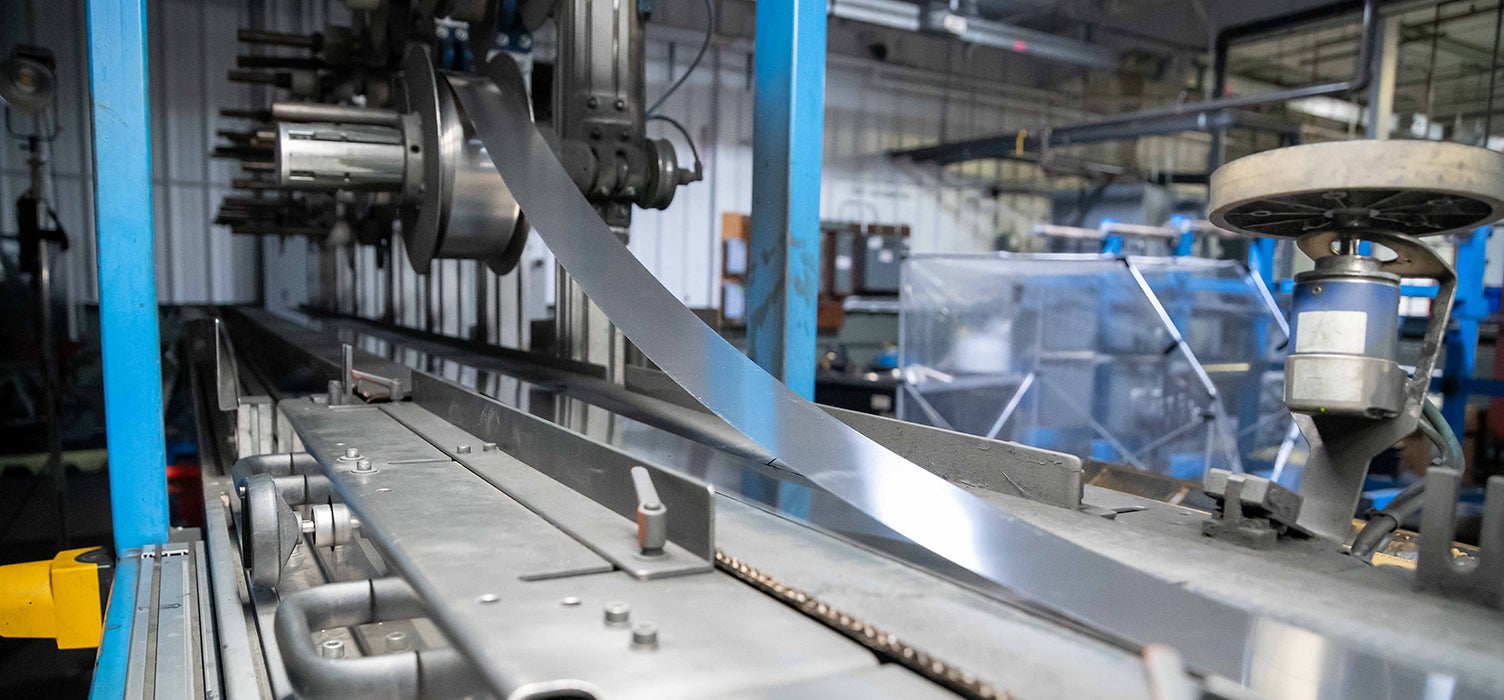
When we refer to “large format” we are typically referring to components beyond three feet by three feet. These larger parts are seeing increased interest across aerospace applications, particularly for battery boxes, interior panels, and cabin components as manufacturers seek opportunities to convert metallic parts to thermoplastic alternatives.
One of the most significant misconceptions OEMs have when switching to large format thermoplastics is expecting the material to behave like aluminum. It simply doesn’t. Additionally, upfront tooling costs are often higher than with metallics, creating what many customers experience as “sticker shock”.
This one-time tooling investment can be recovered through operational benefits. The primary motivation behind converting to large format thermoplastics is fuel cost optimization. Commercial aircraft like the 777 and 787 provide a clear mechanism to justify the higher upfront investment, as weight savings translate directly to reduced fuel consumption over the aircraft’s lifetime. The superior strength-to-weight ratio of thermoplastic composites makes these conversions economically viable for high-utilization aircraft. While aluminum is lighter than traditional metals like steel, carbon fiber weighs up to 50% less, while still offering greater structural integrity. This difference has major implications in industries where reducing weight translates to higher efficiency, like in automotive fuel economy or aerospace payload performance.
For aerospace applications with production volumes ranging from 50 to 250 parts per month, or roughly 1,000 pieces per year, the economics typically work favorably. While this process is involved, and not suited for extremely high-rate production, these volumes align well with typical aerospace component requirements.
Our large format thermoplastic forming can accommodate virtually any aerospace-grade material. Consolidation equipment capable of reaching 400°C or higher can process all common thermoplastics, including high-performance materials like PEEK, PEKK, LMPAEK, and PEI, all materials meeting important specifications.
The process also supports various fiber reinforcements, including carbon fiber, glass fiber, and custom laminates designed for specific applications such as RF transparency in radome applications. Unlike metal with its fixed grain structure, a strategic layup design allows manufacturers to orient fiber reinforcement for directional strength, optimizing performance in specific directions based on load requirements.
Large format thermoplastics offer significant advantages over metallic forming when it comes to complex geometries. Unlike sheet metal with its standard bend radii and other limitations, thermoplastic composites can achieve much more organic, complex shapes.
Key design parameters include maintaining a minimum 5° draft angle and depth considerations up to approximately six inches for optimal forming results. The material wraps around rounds, ovals, and contours with considerable flexibility, though extremely deep draws present challenges.
Lead times vary depending on material requirements. Standard aerospace laminates typically carry conventional metallic lead times. However, custom laminates sourced from specialized suppliers, particularly from Europe, may require 12 weeks just for material procurement.
For tooling development, OEMs should plan for approximately 20 weeks, accounting for design, simulation, in-house tooling development, and fabrication. Whether the OEM or manufacturer owns the tooling can be negotiated based on specific program requirements.
For large format thermoplastics in aerospace, BAC 5348, the industry standard specification for composite stamp forming, represents the benchmark qualification. This specification is widely recognized across the industry as the gold standard for thermoplastic stamp forming.
Quality control for thermoplastics requires more sophisticated tracking than metallics. While aluminum uses lot numbers for material runs, thermoplastics demand individual laminate tracking throughout the manufacturing process, as each laminate is unique. Robust ERP integration and standard work procedures are essential for maintaining traceability.
Thermoplastic assembly typically utilizes bonding rather than mechanical fasteners. Advanced techniques like plasma treating create exceptionally strong bonds for thermoplastic assembly, a specialized capability not widely available in the industry. This expertise eliminates concerns about integrating thermoplastic components with other aircraft materials and structures.
For new development projects, early engagement with your manufacturing partner is critical. Simulation and design optimization can be performed at a fraction of the tooling investment cost, potentially one-tenth the expense, allowing validation before committing hundreds of thousands of dollars to production tooling. For part conversions versus standard OEM components, involving your manufacturing partner sooner rather than later ensures optimal design adaptation from metallic to thermoplastic applications.
Beyond weight savings, large format thermoplastics offer superior corrosion and fatigue resistance with essentially no maintenance requirements. Testing on 787 components installed ten years ago showed no degradation, thermoplastic materials are considered to have an indefinite life at room temperature. This durability eliminates ongoing maintenance concerns and reduces lifecycle costs.
Large format thermoplastics represent a proven solution for aerospace OEMs seeking weight reduction and performance optimization. Understanding that these materials behave differently than metals, planning for appropriate tooling investment, ensuring proper qualification standards, and partnering early in the design process are keys to successful implementation. With the right expertise and collaboration, converting from metallic to thermoplastic components delivers long-term operational and economic benefits that justify the initial investment.
Contact our team to learn how Re:Build Cutting Dynamics can support your mission-critical requirements.
Our team at Re:Build Cutting Dynamics wants to ensure that all your questions regarding large format thermoplastic composites have been answered. With that in mind, feel free to contact us today with any questions you may have. We look forward to assisting you.
