
October 28, 2026
At first glance, an aerospace bracket, fitting, or panel can look almost too simple to matter. A few dimensions, a familiar shape, nothing that jumps off the page. Anyone who has spent time on a manufacturing floor knows the truth: there is no such thing as a truly simple aerospace part. A print doesn’t clearly show layers of requirements that shape how the part is planned, made, inspected, and documented. Understanding the reality of complex aerospace components is what separates an experienced manufacturer from one that gets caught off guard downstream.
Sometimes the most significant requirements are the easiest to overlook. A single note in the fine print, referencing a standard or specification, may not be reflected anywhere in the dimensions or geometry of the drawing, yet it can fundamentally reshape the scope of the entire job. In the world of aerostructure manufacturing, these are known as invoked requirements. In some cases, one specification calls out another, which in turn calls out another, creating a chain of obligations that must all be satisfied. This is how a basic part can carry a stack of compliance and process demands that were not obvious at first glance. What looked simple is, in reality, a complex aerospace component, and each requirement adds cost, time, and layers of process control and documentation.
When a customer’s data package is missing pieces, our team has to track down the information, pull from multiple sources, and assemble a clear picture so the production floor knows exactly what to build. It is a common practice, but it takes real effort and expertise to do it right.
Tight tolerances drive decisions throughout the entire manufacturing process. When a demanding tolerance surfaces during quotation, it triggers a disciplined feasibility review: Do our processes have the capability to hold it? What tooling and fixturing will the part require, and at what cost? Can we measure the feature to prove compliance? Determining this is a team effort spanning account management, engineering, quality, and every process owner touching the job. Early in a program, we can sometimes negotiate tolerance relief with the customer. More often, particularly on legacy parts with a proven history, the tolerance is fixed, and the part demands specialized equipment and specialized skill to hold it. As tolerances tighten, fewer machines are capable of the work and fewer people are qualified to run it, which slows the flow through both manufacturing and inspection.
Environmental conditions carry equal weight. Metal expands and contracts with heat and cold, and when you are working within tenths of thousandths, temperature and humidity are not incidental factors. That is precisely why controlled conditions, and in some cases clean rooms, become part of the equation.
Material selection introduces its own layer of complexity. Hot forming titanium demands an entirely different approach than working with aluminum, and you cannot run one material through the other’s process and expect it to survive. Each material, and even each grade of a given material, responds differently to forming, machining, and heat. Understanding how a material behaves, including tool wear rates and machining parameters, is the difference between a controlled, repeatable process and a costly surprise late in production. Cutting a two-inch square from a hardened material is a fundamentally different undertaking than cutting the same square from soft, low carbon stock, even though the geometry is identical.
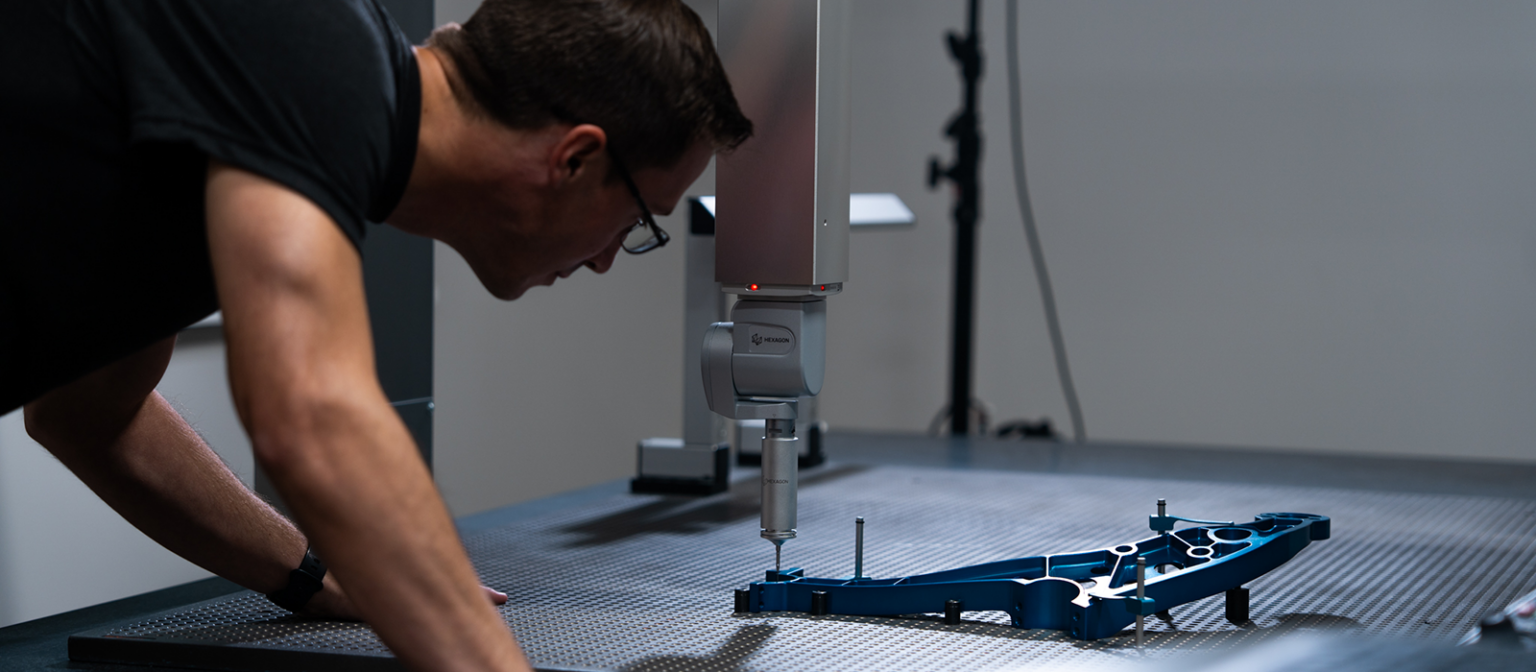
Proving conformance is, to some extent, its own discipline. First-piece inspection, in-process inspection, receiving inspection for outside processes, and final inspection all come into play. From there our quality team builds a first article package to the customer’s requirements and ships it with the parts. Many programs are also moving toward more demanding documentation formats that require even deeper feasibility and capability studies up front.
All of this is dependent on traceability. Everything comes back to knowing where a part came from, what it is made of, and how every process affected it. That means tracing raw material all the way back to the mill, confirming its specification controlled chemical and physical properties, and documenting how each process shaped the part along the way. We maintain records with the capability to trace a part indefinitely, and we default to a minimum of ten years when a customer has no specific requirement.
Often, the most valuable work never appears on a print. Advanced product quality planning, control plans, and inspection plans all happen before the first part is cut. There is implied knowledge earned over years of running similar parts. Something as simple as creating fixtures for heat treatment can prevent defects that a less experienced shop would only discover too late.
That same experience is what makes us a better collaborator. When a customer needs to reduce cost or lead time, we can walk them through realistic options and find the best path for their specific part. It is a partnership, and it is built on knowing what the fine print really means.
Behind every part is a framework of discipline, process control, and documentation built to meet the full weight of aerospace requirements. Advanced quality planning, defined control plans, in process and final inspection, and complete traceability all work together to ensure conformance before and during production. That rigor is what turns a seemingly simple part into complex aerospace components done right. If you have a part you want built to that standard, our team is ready to help. Contact us today.
Often, the hardest challenges can come from a single note in the fine print that can reference a standard or specification that invokes additional standards, each one adding cost, process control, and time. Material behavior adds another layer, since each material and even each grade responds differently to forming, machining, and heat. Managing these demands takes engineering experience and disciplined planning long before the first part is cut.
Cost is driven by invoked requirements, tight tolerances, material selection, and the inspection and documentation needed to prove conformance. It is easy to overlook tool wear rates on harder materials, which can significantly affect both cost and schedule if they are not understood up front.
Re:Build’s quality team develops a first article package to the customer’s requirements and ships it with records such as material and special process certifications. Traceability underpins all of it, including tracing raw material back to the mill and its specification controlled chemical and physical properties. We maintain records with the capability to pull them indefinitely and default to a minimum of ten years when a customer has no specific requirement.
Look for a partner whose experience shows up before production starts. Much of the most valuable work, from interpreting invoked requirements to advanced quality planning, happens up front. Experience also prevents costly surprises, such as knowing to send a tool along with parts headed out for heat treatment to confirm conformance, a step a less experienced shop would miss. The right partner treats the work as a true partnership and uses that experience to help you control cost, meet requirements, and build complex aerospace components the right way.
Our team at Re:Build Cutting Dynamics wants to ensure that all your questions regarding complex aerospace components have been answered. With that in mind, feel free to contact us today with any questions you may have. We look forward to assisting you.
